Blog Details
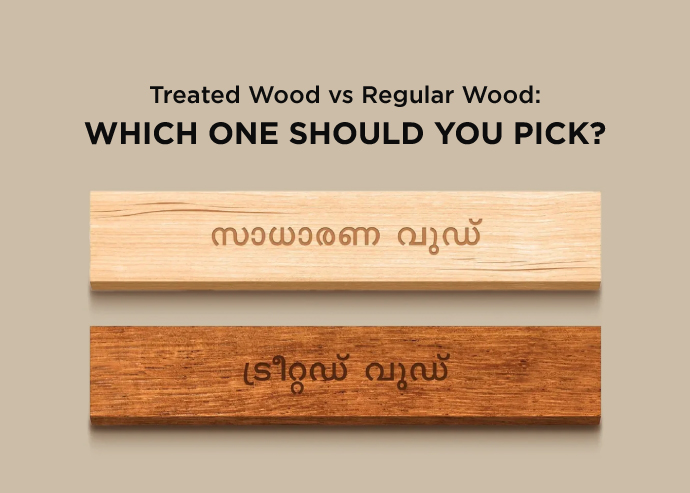
The Wood Selection Guide: Treated vs Regular Wood Explained Simply
Walk into any timber yard in Kerala and you’ll hear the same conversation play out:
“Ethu edukkaan? Normal wood mathi alle? Or is treated wood actually worth it?”
And most of the time, the decision comes down to habit, hearsay, or whatever the carpenter suggests. But wood isn’t a one-size-fits-all material, especially not in a climate like ours.
Kerala is paradise for humans and termites alike. We have humidity, monsoon rain, salt in the coastal air, fungal growth, and huge fluctuations in temperature between seasons. Wood behaves beautifully in some regions of the world, here, it fights for survival.
So if you’re building anything — a home, a pergola, furniture, decking, a gate, window frames, or even fencing — the first real question is:
Should you go for regular wood or treated wood?
Let’s break it down in a way that helps you choose confidently.
What Exactly Is Regular Wood?
Regular wood, or untreated wood, is timber that hasn’t undergone any chemical or thermal enhancement process. It goes through basic seasoning or kiln-drying and then heads to the carpentry stage.
Common examples used in Kerala include:
- Pine
- Rubberwood
- Mahogany
- Imported spruce/fir
- Teak substitutes
- Local hardwoods depending on availability
Strengths of Regular Wood
Regular wood has its advantages:
- Natural beauty and warm grains
- Lower upfront cost
- Readily available
- Works well indoors where temperature and humidity are controlled
The Catch?
Kerala’s environment isn’t gentle on timber.
Regular wood is vulnerable to:
- Moisture absorption
- Seasonal expansion and shrinkage
- Termites and wood borers
- Fungus and decay
If not maintained properly — and regular polishing alone isn’t enough — most untreated wood eventually cracks, warps, softens, or becomes termite food.
So yes, untreated wood can perform well, but only in the right context.
What Makes Treated Wood Different?
Treated wood is timber that has been strengthened through specific processes designed to enhance durability. These treatments push preservatives deep into the structure of the wood or modify the wood’s cellular behavior.
Common treatment types include:
1. Pressure Treatment
A vacuum and pressure chamber forces protective preservatives deep into the grain. These preservatives are usually copper-based and make the wood highly resistant to rot, insects, and moisture.
2. Thermal or Heat Treatment
The wood is heated to high temperatures, changing its internal chemistry. This reduces its tendency to absorb water and improves stability — especially useful in rainfall-heavy regions.
3. Acetylated Wood
A biochemical process using acetic anhydride modifies the wood at a molecular level. It becomes dimensionally stable, naturally resistant, and long-lasting — without heavy toxic chemicals.
Why These Treatments Matter
Treated wood performs better where Kerala challenges regular wood the most — moisture, insects, and outdoor exposure.
It doesn’t warp easily, resists termites, and can last decades with minimal maintenance.
Kerala Weather Comparison: Who Survives Better?
| Condition | Regular Wood | Treated Wood |
| Monsoon moisture | Swells, cracks, absorbs water | Moisture resistance built-in |
| Termites & borers | High risk | Strong chemical barrier |
| Outdoor installations | Not recommended | Designed for outdoors |
| Contact with soil/walls | Vulnerable | Safe with proper treatment |
| Lifespan | 5–10 years (varies) | 15–30+ years |
| Maintenance needs | Frequent | Minimal |
In Kerala’s climate reality, treated wood doesn’t just win — it plays a different league.
Where Regular Wood Still Makes Sense
Untreated wood isn’t obsolete. It’s suitable — even ideal — when conditions are stable and controlled.
Great use cases include:
- Indoor cabinetry
- Bedroom furniture
- Study tables and shelving
- Decorative panels
- Wooden accents not exposed to exterior environments
If the wood won’t face moisture or insects and you’re working with naturally durable hardwood, untreated wood can work beautifully.
Just don’t use untreated wood for:
- Balconies
- Window frames
- Outdoor furniture
- Decking
- Exposed beams
- Structures touching soil
That’s asking for trouble.
When Treated Wood Is the Smarter Investment
Treated wood is built for real-world exposure — the kind Kerala gives generously.
Ideal uses include:
- Decks and patios
- Pergolas and gazebos
- Carporches and cladding
- Gates and fencing
- Garden benches
- Timber in contact with soil or concrete
- Window or door frames facing outdoor humidity
If the installation is outdoors or semi-outdoors, treated wood is not an upgrade — it’s the minimum sensible choice.
Cost: Not as Simple as Price Per Cubic Foot
This is where most people get misled.
Regular wood appears cheaper initially.
But factor in:
- Termite treatment costs
- Polishing every year or two
- Repair or replacement
- Possible structural failure
Suddenly the “cheap” option becomes the expensive one.
Treated wood flips the economics:
- Higher initial cost
- Lower lifetime cost
- Far fewer repairs
- Much longer usable lifespan
You’re not just buying wood — you’re buying years without problems.
Aesthetics: Does Treated Wood Look Different?
Short answer: not really.
Modern treatment processes aren’t like the old green or oily-looking timber. Today’s treated wood:
- Shows natural grain
- Accepts stain, oil, polish, or paint
- Ages gracefully rather than deteriorating
You don’t lose beauty — you gain stability.
Sustainability: The Silent Bonus
Many assume treated wood is “chemical” and therefore worse for the environment.
In reality, treated wood is more sustainable in the long run because:
- It lasts longer, meaning fewer trees are cut over time
- Many treatments today are safer and globally regulated
- Wood stores carbon — and longer-lasting wood stores it longer
So if sustainability matters, longevity matters even more.
The Deciding Question
Forget the confusion. Here’s the simple decision logic:
If the wood faces weather, insects, moisture, or outdoor exposure → choose treated wood.
If the wood stays indoors in a controlled environment → untreated wood can work.
And if you want reliability, predictability, and peace of mind?
Treated wood wins — especially in Kerala.
Final Takeaway
Wood should last. It should age beautifully, not rot, warp, or turn hollow.
Choosing treated wood isn’t about spending more — it’s about spending once.
So next time someone says:
“Treated wood venamo? Normal wood mathi alle?”
answer with clarity:
“I’m building something that should last decades — not just until the next monsoon.”